

James Graham’s crime drama about a crossbow killing rocking an ex-mining town is the TV equivalent of bowling a strike. Everything you could hope for is here
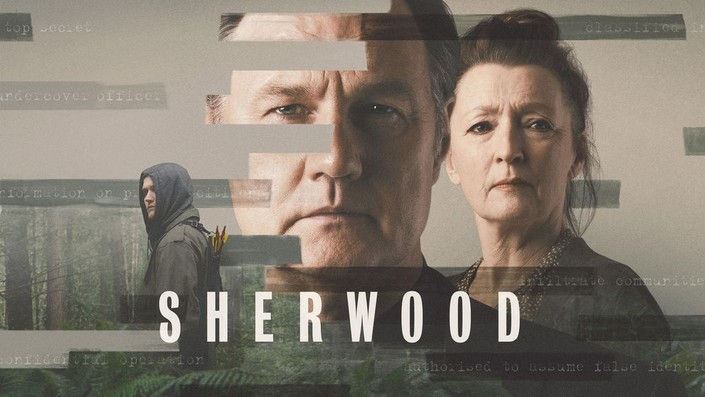
The husband and I have just watched the BBC drama Sherwood – and let me say up top, one of its greatest – drama series, Sherwood, opens with footage of the 1980s miners’ strike. Arthur Scargill shouting, Margaret Thatcher speechifying (that pained and painful voice hurling you back into the past), police dragging people from the picket line, children screaming “scab” at those crossing it. To anyone over the age of 45 or so, it feels like yesterday.

Which is very much the point. Sherwood’s six episodes (airing on Monday and Tuesday nights for three weeks) centre on two shocking murders that took place in real life in 2004, near where writer James Graham grew up, in the Nottinghamshire mining district of Ashfield. Out of these terrible events, Graham, as perhaps only a native – albeit one blessed with his talent – could, conjures a portrait as moving as it is convincing of a place steeped in historic grief and bitterness, full of personal enmities and festering wounds, but bound still by them all.
Alun Armstrong plays Gary Jackson, a National Union of Mineworkers (NUM) stalwart in a village dominated by the Union of Democratic Mineworkers (UDM), who, let’s say, took a softer stance on striking and the privatisation of the coal industry. He is married to Julie (Lesley Manville), who is estranged from her sister Cathy (Claire Rushbrook), although they live next door to each other. When Gary is found dead in the street, killed by a crossbow bolt, the most immediate person of interest to the investigating officer – local boy made good (“Now I live on the outskirts of the village”) Ian St Clair (David Morrissey) – is “scab” Dean (Sean Gilder), with whom Gary had often and recently argued. But he also discovers that Gary’s arrest records from 1984 are inexplicably redacted, even though the charges were dropped thanks to the intervention of Kevin Salisbury (Robert Glenister), one of the Metropolitan police officers sent from London to help local forces control the strikers.
Salisbury’s superiors send him up again from the capital to assist-without-assisting. There’s also a connection to the local drug-dealing family, the Sparrows, whose son we have seen intimidating Gary. St Clair does not know that Cathy’s stepson, who is about to go to prison, is into archery because his dad (Kevin Doyle) didn’t tell them and Cathy doesn’t dare.
Over the way are the Fisher family, due to become more tightly bound to the main narrative next episode. Sarah (Joanne Froggatt) is standing as the local Tory councillor (“‘red wall’ fell, didn’t you hear?”) and is newly wed to Neel (Bally Gill). Her widowed father-in-law Andy (Adeel Akhtar, an absolutely heartbreaking mass of unspoken sorrow and need), is trying to get used to the new domestic order as Sarah remodels the garden and redecorates the house. “What’s an occasional chair?” he says, staring at the item she has proudly unveiled. “It’s a chair you sit on occasionally,” she snaps.
Everything you could hope for is here. It is the drama equivalent of bowling a strike: a writer knowing the setting and themes in his bones, a dream cast drawn to the richly allusive resulting script, each of those actors doing their best work in years (which, given the standards that Manville, Morrissey, Armstrong et al maintain is quite something to watch) and their chemistry, with beautiful direction from Lewis Arnold and Ben A Williams, creating something even greater than the sum of its superb parts. It’s even funny – because it’s about people and because it has made those people real and because real people are, forever, even in their darkest moments, funny. When Salisbury tells St Clair that he has worked on 293 murders, to impress him with his credentials, Nottingham’s finest replies: “Well, London sounds fucking lovely.”
Without sacrificing story or suspense, and never paying less than meticulous attention to teasing out the knotty mass of relationships and the ramifications playing out around the village, Sherwood builds slowly – layer by subtle, evocative layer – into a magisterial state-of-the-nation piece. Forty years of emotion and history have been transmuted, lovingly and painstakingly, into art. It’s the cleverest, most compelling and most moving thing I’ve seen in years. It should, and undoubtedly will, win awards for all concerned. But it should also last, enduring in our memories and set down in books about how to write, act and how best to conjure up a specific world and make it universal, how to show us what we are and how we got here. It is, simply put, wonderful.


